
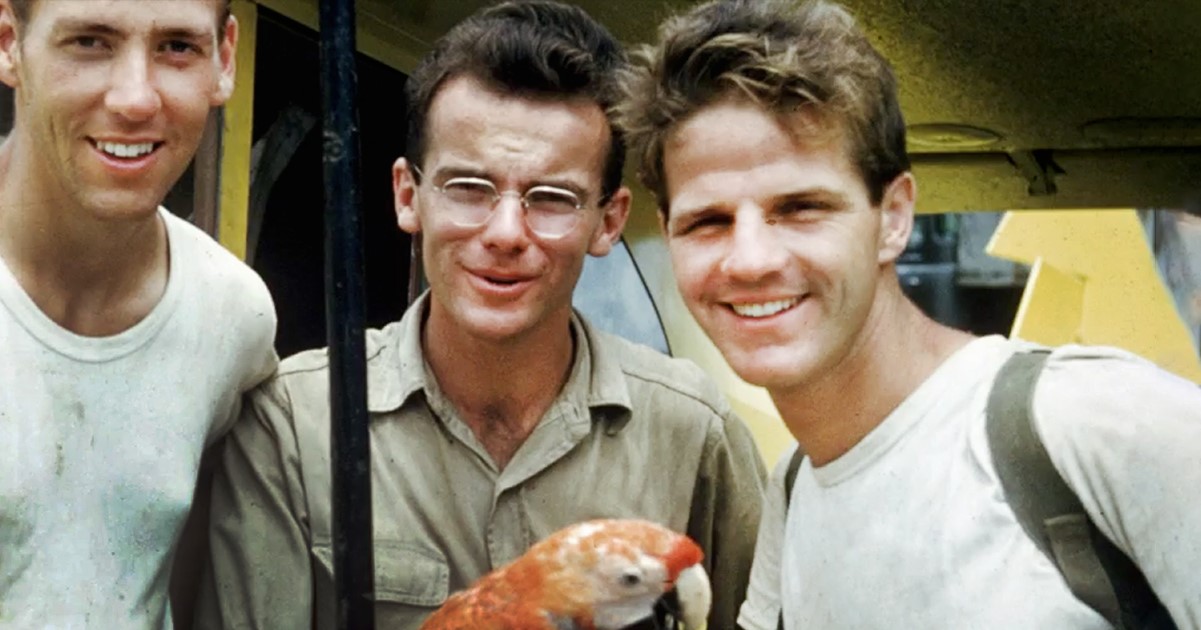
One summer in college, I spent six weeks in northern India on a missions trip. My five friends and I traveled to remote villages. Sometimes, we ate food that was not great and slept in sketchy accommodations.
Before we left the U.S., we passed through Newark airport and ate at an A&W restaurant. In India, we couldn’t eat beef all summer because of the Hindu reverence for cows. When we were hungry or discouraged, we’d talk about that A&W burger waiting for us back home. Just thinking about it, and about home, helped us get through the difficult days.
Hope is a powerful force. It carries mothers through labor pain as they anticipate holding their baby. It sustains athletes through brutal training as they envision the finish line. And it sustains Christians through cultural hostility as we look forward to our true home.
This is the message of 1 Peter: We are exiles in this world, but secure in the Lord.
Why 1 Peter Matters Right Now
For centuries, Western culture was shaped by a foundation of Judeo-Christian values. I’m not saying everyone was a Christian. But there was a general consensus about the existence of God, the value of Scripture, and at least a basic understanding of the gospel.
That consensus is crumbling.
Secularism has advanced rapidly. Traditional religion—and its influence on broader culture—has been in steep decline for decades. Sociologist Christian Smith documents this in his book Why Religion Went Obsolete, showing that Christian belief and practice have declined significantly since around 1991.
You’ve probably felt this shift:
- Your coworkers think your sexual ethics are outdated.
- You feel pressure to stay quiet about what you believe.
- The values you grew up with are now considered hateful or bigoted.
If this describes your experience, you’re getting a taste of what Peter’s first readers faced. They operated in a Greco-Roman culture that viewed Christians as odd at best and dangerous at worst.
We are increasingly at odds with our culture. And 1 Peter shows us how to stand firm.
We Are Exiles in This World
Peter opens his letter with striking language:
“Peter, an apostle of Jesus Christ: To those chosen, living as exiles dispersed abroad in Pontus, Galatia, Cappadocia, Asia, and Bithynia…” (1 Peter 1:1)
Notice how he describes his readers: exiles.
He doesn’t mean political refugees fleeing war or persecution. He’s speaking spiritually. Some of these Christians probably still lived in their hometowns. But they were exiles because their citizenship no longer belonged to the Roman Empire. Their home was no longer rooted in Turkey or Greece. It was with Jesus in the new heavens and earth.
The Biblical Concept of Exile
This language of spiritual exile runs throughout Scripture.
Abraham called himself an exile when Sarah died and he looked for burial property in Canaan (Genesis 23). David prayed, “I am here with you as an alien, a temporary resident like all my ancestors” (Psalm 39:12). The author of Hebrews reminds us, “We do not have an enduring city here; instead, we seek the one to come” (Hebrews 13:14).
Believers are exiles because we suffer for our faith in a world that finds it off-putting and strange. We proclaim a message of salvation through a crucified Messiah—a message the world considers foolish. We submit to God’s authority over gender, sexuality, life, and death—positions that clash with modern autonomy.
The lines are being drawn more starkly between those who confess Christ’s authority and those who reject it.
What Exile Looks Like Today
Our culture increasingly rejects the idea of God-given, biological reality. From one side of the political spectrum, biological facts are dismissed in favor of subjective feelings. From the other side, political expediency often trumps moral conviction. Both reveal a deeper problem: the rejection of God as Creator and authority.
But we do not waver. We are exiles, awaiting the return of our King.
We stand as a prophetic people who point to the unchanging reality of who God is and how He has revealed Himself. We labor in this culture for its good, but we do not accommodate to its values.
Peter’s message to his readers, and to us, is simple: Stand firm! (1 Peter 5:12).
You will be seen as close-minded. You may be called bigoted, ignorant, or hateful for holding to the gospel. But as exiles, our allegiance is not to cultural acceptance. It’s to Christ.
We Are Secure in the Triune Lord
Knowing we’re exiles might feel discouraging. How can we stand firm when suffering and persecution are certain?
Peter answers by showing us the foundation of our security. Look at verse 2:
“…chosen according to the foreknowledge of God the Father, through the sanctifying work of the Spirit, to be obedient and to be sprinkled with the blood of Jesus Christ. May grace and peace be multiplied to you.” (1 Peter 1:2)
Notice all three persons of the Trinity are at work: Father, Son, and Spirit. The beauty of our salvation is the unified work of the one God who exists in three persons.
Chosen by the Father’s Covenantal Love
We are “chosen according to the foreknowledge of God the Father.” But this isn’t just God knowing facts about the future. It’s far deeper than that. In Scripture, when God “knows” someone, it carries the idea of covenantal love. God didn’t just know you would believe; He loved you into belief.
Paul writes, “God has not rejected his people whom he foreknew” (Romans 11:2). Later he says, “If anyone loves God, he is known by him” (1 Corinthians 8:3). To be foreknown is to be loved, chosen, and set apart by God before you ever existed.
This same word is used of Jesus in 1 Peter 1:20: “He was foreknown before the foundation of the world but was revealed in these last times for you.” God the Son has eternally existed in perfect communion with the Father. Foreknowledge isn’t mere intellectual awareness. It’s intimate, covenantal relationship.
You are chosen because God set His love on you.
Sanctified by the Spirit’s Work
We are chosen “through the sanctifying work of the Spirit.” To sanctify means to make holy, to set apart for God’s purposes.
When the gospel is proclaimed, the Holy Spirit opens blind eyes. He makes spiritually dead people alive. He applies the finished work of Christ to our hearts, transforming us from the inside out.
Paul connects these themes beautifully: “God has chosen you for salvation through sanctification by the Spirit and through belief in the truth” (2 Thessalonians 2:13).
Conversion isn’t just intellectual agreement with facts. It’s the Spirit’s supernatural work that produces obedience and faith.
Sprinkled with Christ’s Blood
We are chosen “to be obedient and to be sprinkled with the blood of Jesus Christ.”
If you’re not familiar with church language, “sprinkled with blood” sounds gruesome. But it’s rooted in the Old Testament concept of covenant.
When Moses inaugurated God’s covenant with Israel, he took the blood of sacrifices and sprinkled it on the people, saying, “This is the blood of the covenant that the LORD has made with you” (Exodus 24:8). The blood signified cleansing, forgiveness, and entrance into relationship with God.
Jesus’s blood is the blood of the new covenant. We are cleansed by His sacrifice. We are brought into relationship with God through His death and resurrection. We respond in obedience, what Paul calls “the obedience of faith” (Romans 1:5).
The Security This Brings
How can spiritual exiles endure suffering, persecution, and cultural hostility?
By knowing we are held fast by the triune God.
- The Father has set His covenantal love on us
- The Spirit has made us new and continues to sanctify us
- The Son has cleansed us with His blood and brought us into God’s family
Because we are secure in God, Peter can pronounce this blessing: “May grace and peace be multiplied to you” (1 Peter 1:2).
Persecution may come. Suffering is certain. But grace and peace are multiplied to those who know and are known by Jesus Christ.
Living as Secure Exiles
So what does this mean practically?
1. Don’t Be Surprised by Cultural Opposition
Peter will say later in his letter, “Dear friends, don’t be surprised when the fiery ordeal comes among you to test you, as if something unusual were happening to you” (1 Peter 4:12). Feeling like an outsider isn’t a sign something’s wrong with you. It’s a sign you belong to Christ. Exiles feel out of place. But feeling out of place doesn’t mean that you are alone.
2. Find Your Identity in God’s Love, Not Cultural Acceptance
The world’s approval is fickle. Cultural trends change. But God’s covenantal love for you is unchanging.
You are chosen. You are sanctified. You are cleansed. You are secure.
When you’re rejected for your faith, remember: You are known and loved by the God of the universe. That’s an identity no one can take from you.
3. Live with Hope
The A&W burger got me through a hard summer because I knew it was waiting for me. How much more should the hope of Christ’s return sustain us through cultural exile? We’re not just enduring until we die. We’re waiting for the King to return and make all things new. We have an inheritance that can never perish, spoil, or fade (1 Peter 1:4).
Live like someone who knows where home really is.
This is the first post in a series on 1 Peter. Peter wrote to help Christians stand firm in hostile cultures. His message is as relevant today as it was 2,000 years ago. Subscribe to get the rest of this series delivered to your inbox, along with other articles about following Jesus as exiles in this world.


Leave a Reply